Retainers, and Why the Work Only Holds If You Wear Them
Teeth have a memory, and a retainer is the only thing standing between finished treatment and slow relapse.
September 8, 2026 · 3 min read
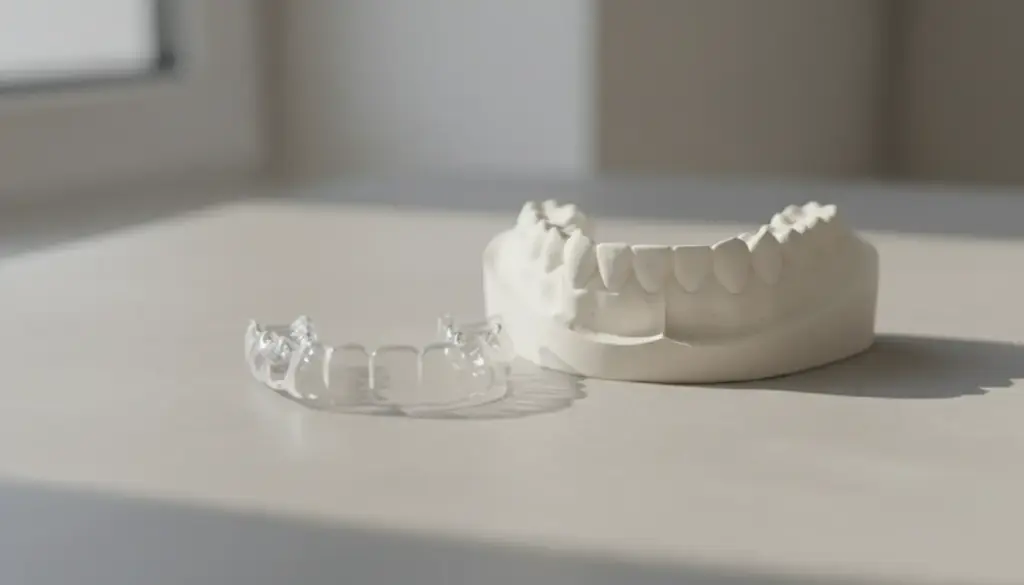
Every set of braces comes off. Every last aligner tray eventually gets worn. And every single time, the teeth that just spent months or years being moved into a new position still remember where they used to sit. A retainer is what keeps that memory from winning. It's not an optional add-on tacked onto the end of treatment, it's the part of the plan that makes the rest of it permanent.
Why teeth move back at all
The ligaments and bone around a tooth take time to fully settle into a new position after it's been moved. Until that happens, there's a genuine pull back toward the old alignment, and it doesn't take long for it to show. This is true whether treatment was braces or aligners, and it's true at any age. Retention isn't a formality for people whose case was complicated. It's simply how the biology works for everyone.
The retainers we use
Most patients get a clear Essix retainer, which we vacuum-form right here from a digital scan of your own teeth once treatment is finished, so it's built to your exact final result rather than an off-the-shelf shape. Some patients use a Vivera retainer instead, depending on the case and what Dr. Becker recommends. Both are worn primarily at night once your teeth have stabilized, though the exact schedule depends on your specific treatment.
What it costs, and why it's usually not a surprise
Retention is built into your treatment plan from the start, so your first retainer isn't a separate bill that shows up after you thought you were done. Retainers generally range from $100 to $1,000 depending on the type, and if you need a replacement later, whether it cracked, got left in a napkin, or simply wore out, a replacement typically costs about $150 per arch. Knowing that going in means there's no unpleasant surprise waiting at the end of treatment.
What happens if you stop wearing it
Slowly, and often without noticing at first, teeth start drifting back toward where they started. It's rarely dramatic in the first few weeks, which is exactly what makes it easy to get lax about. By the time it's visible in the mirror, months of movement have usually already happened, and reversing that means going back into some form of treatment rather than simply picking the retainer back up. Wearing it consistently, especially in that first year when the bone and ligaments are still settling, is genuinely the difference between keeping the result you paid for and slowly losing it.
A few practical habits
- Keep it in its case any time it's not in your mouth, never wrapped in a napkin or tissue
- Clean it with a soft brush and lukewarm water, not hot water, which can warp a clear retainer
- Bring it to check-ups so we can confirm it still fits well
- Call us as soon as it's lost, cracked, or stops fitting properly rather than waiting until your next visit
How the wear schedule usually changes over time
Immediately after treatment, the bone and ligaments around each tooth are at their most unsettled, which is why the first stretch of retainer wear matters more than any other. As things stabilize, most patients move from fuller-time wear to nighttime-only wear, on a schedule Dr. Becker sets based on how your specific case is holding. Retention isn't something that ends after a fixed number of months for everyone. Teeth can keep a very slight pull toward their old position for years, which is why nighttime wear tends to continue well beyond the first year rather than stopping abruptly once things look settled.
If it's been a while since you've worn yours and you're not sure whether your teeth have shifted, don't wait for your next scheduled visit to find out. A retainer that no longer seats properly is worth a phone call the same week you notice it, not a topic for six months from now.
If your retainer needs replacing or you're not sure it still fits the way it should, call our Phoenixville office at (610) 935-1547 or our Plymouth Meeting office at (610) 275-1460. It's a quick fix now, and a much bigger one if it's left too long.
Becker Orthodontics, (610) 935-1547
Call (610) 935-1547More articles
Why the First Orthodontic Visit Happens at Age 7
Age 7 is about watching how the bite and jaw are developing, not about getting braces that week.
Clear Aligners or Metal Braces: An Honest Comparison
Neither option is universally better. The right one depends on the case, the age, and how realistic the compliance is.