Why the First Orthodontic Visit Happens at Age 7
Age 7 is about watching how the bite and jaw are developing, not about getting braces that week.
September 1, 2026 · 4 min read
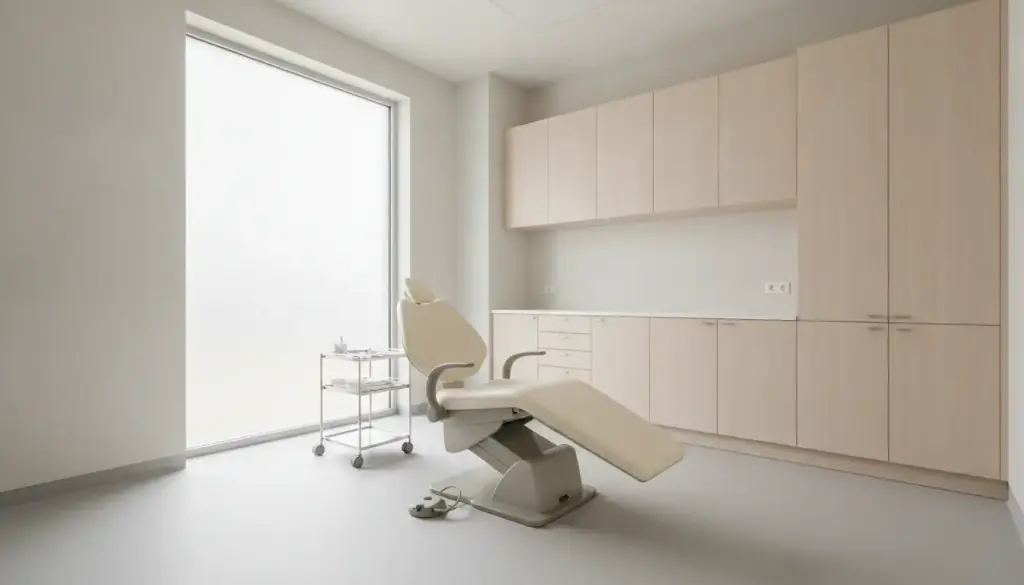
Parents hear "see an orthodontist by age 7" and assume it means braces are coming home that day. It almost never does. The recommendation is about timing a look, not timing treatment, and knowing the difference saves a lot of unnecessary worry in our waiting room.
Where the age 7 guideline comes from
The American Association of Orthodontists recommends that every child see an orthodontist no later than age 7. By that age, the first adult molars and incisors have usually come in, which gives us enough of a picture of how the bite is forming without needing to guess. It's early enough to catch a developing problem while the jaw is still growing and easy to influence, and late enough that we're not reacting to baby teeth that were always going to fall out anyway.
What we're actually checking for
- Crowding, or a jaw that looks too narrow for the teeth still coming in
- How the upper and lower teeth meet, including overbite, underbite, and crossbite patterns
- Whether the jaws appear to be growing at a matched rate on both sides
- Whether there's likely to be room for the adult teeth still under the gums
- Habits like thumb-sucking or prolonged pacifier use that can be shaping the bite
None of this requires braces to address. Most of it just requires someone trained to notice it, at a point where noticing it early actually changes what we can do later.
The free Observation Program
We run a Free Observation Program starting at age 6. It's an every-six-months check-in, at no charge, with no obligation to start anything. The point is to watch a child's bite and jaw development over time instead of making a one-time call based on a single visit. Some kids we see for years before anything needs to happen. Others show something in year two that wasn't visible in year one. Either way, you're not paying to find out, and you're never being pushed toward treatment your child doesn't need yet.
What honestly happens at that first visit
We'll take a look at your child's teeth and bite, sometimes with a scan or an X-ray if there's something worth a closer look, and talk you through what we see in plain language. For the majority of 7-year-olds, the answer is: this looks like it's developing normally, let's check again in six months. That's not us being cautious to avoid selling you something. Most orthodontic problems that are visible at 7 aren't actually ready to be treated at 7, because there's still a lot of growth and tooth eruption left to happen.
When early treatment does get recommended
For a smaller group of kids, we do recommend starting something early, usually because a specific issue benefits from being addressed while the jaw is still growing rather than waiting until it's fully developed. That can mean a palatal expander to widen a narrow upper jaw, a space maintainer to hold room after an early baby tooth is lost, or a short round of interceptive treatment to correct a bite pattern before it gets more entrenched. If your child falls into that group, we'll explain exactly why, what the plan looks like, and what it's meant to prevent down the road. If your child doesn't, we'll tell you that too, and we'll see you again in six months.
What the next few years usually look like
For most families, the Observation Program means a short, low-key visit twice a year for a while. We check the same handful of things each time: are the adult teeth coming in with enough room, does the bite still look balanced, has anything changed since the last visit. Some children stay in observation right up until every adult tooth has erupted, and full treatment, if it's needed at all, starts in the young teen years the same way it always has. Others show something in one of those six-month checks that shifts the plan. Either way, nothing about the twice-yearly visit changes your day much, and there's no pressure at any point to start something before it's actually useful.
It's worth saying plainly: a lot of kids who come in at 7 never need Phase 1 treatment at all, and go on to have one straightforward round of braces or aligners in their young teens, the same as kids who were never seen this early. The value of the early visit isn't that it guarantees early treatment. It's that it means nobody is guessing later.
If your child is 6 or older and hasn't had a first orthodontic check yet, there's no cost or commitment to finding out where things stand. Call our Phoenixville office at (610) 935-1547 or our Plymouth Meeting office at (610) 275-1460, or book online, and we'll take it from there.
Becker Orthodontics, (610) 935-1547
Call (610) 935-1547More articles
Clear Aligners or Metal Braces: An Honest Comparison
Neither option is universally better. The right one depends on the case, the age, and how realistic the compliance is.
What a Broken Bracket or a Poking Wire Actually Needs
Most orthodontic emergencies are uncomfortable, not dangerous, and both of our offices see them same-day.